
Hello and welcome back!
You’ve made it to Episode 24 of the Token Launch Masterclass, and today we’re talking about something the Web3 space loves to romanticize but rarely executes well: managing a truly global community.
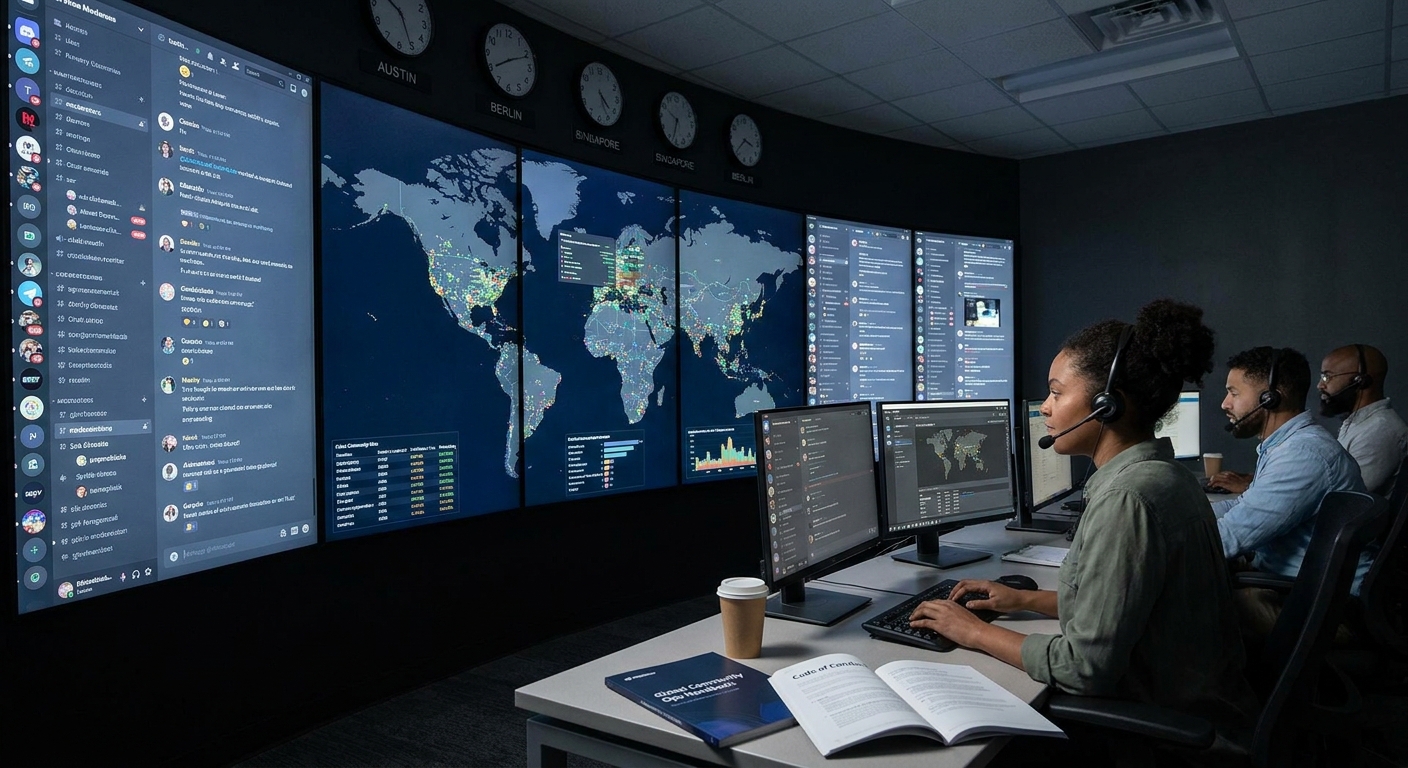
The moment you spin up that Discord server or Telegram group, congratulations—you’re no longer running a cute little project. You’re running a 24/7 global operation. There is no “local” in Web3. The sun never sets on your Discord.
I’ve watched teams get completely steamrolled because they staffed for one time zone, only to wake up to a full-blown crisis that had been brewing for eight hours on the other side of the planet. It’s not pretty.
Today I’m going to give you a practical, battle-tested playbook for handling time zones without burning out, navigating cultural differences without stepping on landmines, and building a moderation system that scales. Let’s dive in.
The 24/7 Problem Is Real (And Most Teams Are Doing It Wrong)
Trying to manage a global community from a single office—whether that’s Austin, Berlin, or Singapore—is pure insanity. It’s also a fast track to founder burnout and community collapse.
My solution is a three-pronged approach I call “Follow the Sun.”
First, build a distributed leadership team.
You need solid community managers covering three major regions: Americas, EMEA, and Asia-Pacific. These aren’t junior support roles. They’re your regional captains. Pay them properly. The return on investment is enormous.
Second, automate the boring stuff.
Your humans are too valuable to be kicking spam or answering “When moon?” for the thousandth time. Deploy bots for FAQs, spam detection, and initial verification. Think of automation as your night-shift employee who never sleeps and never complains.
Third, empower your community through a proper Ambassador Program.
Find your most helpful, long-term members. Vet them carefully. Give them real tools, clear guidelines, and genuine authority. These people become your eyes and ears when your core team is offline. This isn’t “making them do your job.” It’s giving them ownership—and that’s pure rocket fuel for community strength.
Google Translate Is Not a Localization Strategy
Let me paint a painfully common picture.
A team writes an announcement in English, runs it through Google Translate, posts it in six languages, and calls it “going global.” Then they wonder why their Asian communities went silent.
Culture isn’t just language. It’s nuance.
I once advised a project that used a sarcastic American meme to announce a minor delay. In the US, everyone chuckled. In their key Asian markets, it was interpreted as flippant and disrespectful. The trust damage was immediate and expensive.
My unbreakable rule: Create a “Global-First” content style guide from day one. Use simple, clear language. Kill all idioms, sports metaphors, and cultural references. For anything important—anything—have it reviewed by native speakers from your target regions. This isn’t a translation check. It’s a cultural sanity check.
It’s the cheapest insurance policy you’ll ever buy.
Your Two-Document Moderation System
This is where most projects fall apart. They have vague rules and hope for the best. Hope is not a strategy.
I always push for a two-document system:
- The Public Code of Conduct
Short, simple, and written in plain language. This is your community constitution. No ambiguity. - The Internal Moderator Handbook (your secret sauce)
This document is pure gold. It should contain:- Explicit escalation procedures (“If a potential exploit is being discussed at 3 AM, your APAC mod calls Sarah immediately”)
- Response templates for common FUD scenarios
- A clear disciplinary matrix (warning ? mute ? ban)
The matrix is especially important. When moderation becomes a judgment call instead of a process, you get accusations of bias. Consistency is the bedrock of trust.
Discord vs Telegram: This Isn’t Even a Debate
I know I’m going to trigger some people here, but let’s be honest.
If you’re serious about building a structured, healthy, global community, use Discord.
Telegram is fantastic for many things. Running a complex global community is not one of them. It’s a firehose of chaos.
With Discord you can create dedicated channels for announcements, language-specific rooms, technical support, and off-topic conversation. You can assign clear roles so everyone knows who the team is, who the ambassadors are, and who to trust.
A few bots I always recommend starting with:
– MEE6 for role automation and general moderation
– Shieldy as your bouncer at the door (keeps the spam bots out)
Translation bots? They’re fine for casual multi-language chat. But if you use one for official announcements, you’re playing with fire. I’ve seen it cause real crises.
Your 3 AM Crisis Playbook
This is the scenario that keeps founders awake at night.
Here’s exactly what I require from every team I work with:
Pre-written holding statements. Your moderator’s first job isn’t to solve the problem—it’s to communicate control. Something like:
“We are aware of the situation and actively investigating. Updates will be posted in this channel.”
That single message buys you critical time.
A literal phone tree. “Contact the team” is not a plan. The plan is: “If X happens, call Sarah. If no answer in five minutes, call me. If I don’t answer, call the founder.” Be that specific.
The immediate lockdown protocol. Shut down general chat and direct everyone to the Announcements channel. You become the single source of truth instead of letting panic and rumors run wild.
This isn’t complicated. It’s just discipline.
Moving From Management to Nurturing
All the systems we’ve discussed so far are defensive. Now let’s talk about playing offense.
Dedicated language channels aren’t optional—they’re table stakes. Don’t make your Turkish, Vietnamese, or Brazilian community struggle through English-only spaces. It’s disrespectful and kills engagement.
Create a global events calendar. One project I worked with saw their Southeast Asian engagement explode after they posted a beautiful graphic celebrating Lunar New Year. Small signals of respect create massive loyalty.
Rotate your AMAs. Stop holding every single one at 9 AM Pacific time. Spread them across time zones. If you have the budget, hire live translators for key languages. Your community will notice and remember.
The Bottom Line
Building a global community that doesn’t implode isn’t about luck. It’s about deliberate design.
It requires:
– A distributed team that follows the sun
– Iron-clad guidelines and escalation paths
– The right tools used the right way
– Genuine cultural respect and inclusivity
Do these things and you won’t just have more members—you’ll have a resilient, loyal base that sticks with you when the market gets ugly.
And in this industry, that’s worth more than almost anything else.
Thanks for hanging out with me today. This stuff isn’t glamorous, but getting it right is one of the highest-leverage things you can do for your project.
Next week we’re shifting gears completely. In Episode 25: The Pre-TGE Liquidity Strategy, we’re diving into exactly how to plan your token launch so it doesn’t crash and burn on day one. You won’t want to miss it.
In the meantime, I’d love to hear from you. What’s been your biggest challenge managing a global community? Drop a comment below or reach out on Twitter.
Until next time, stay thoughtful and build responsibly.
— Your Token Launch Mentor